

Accessibility
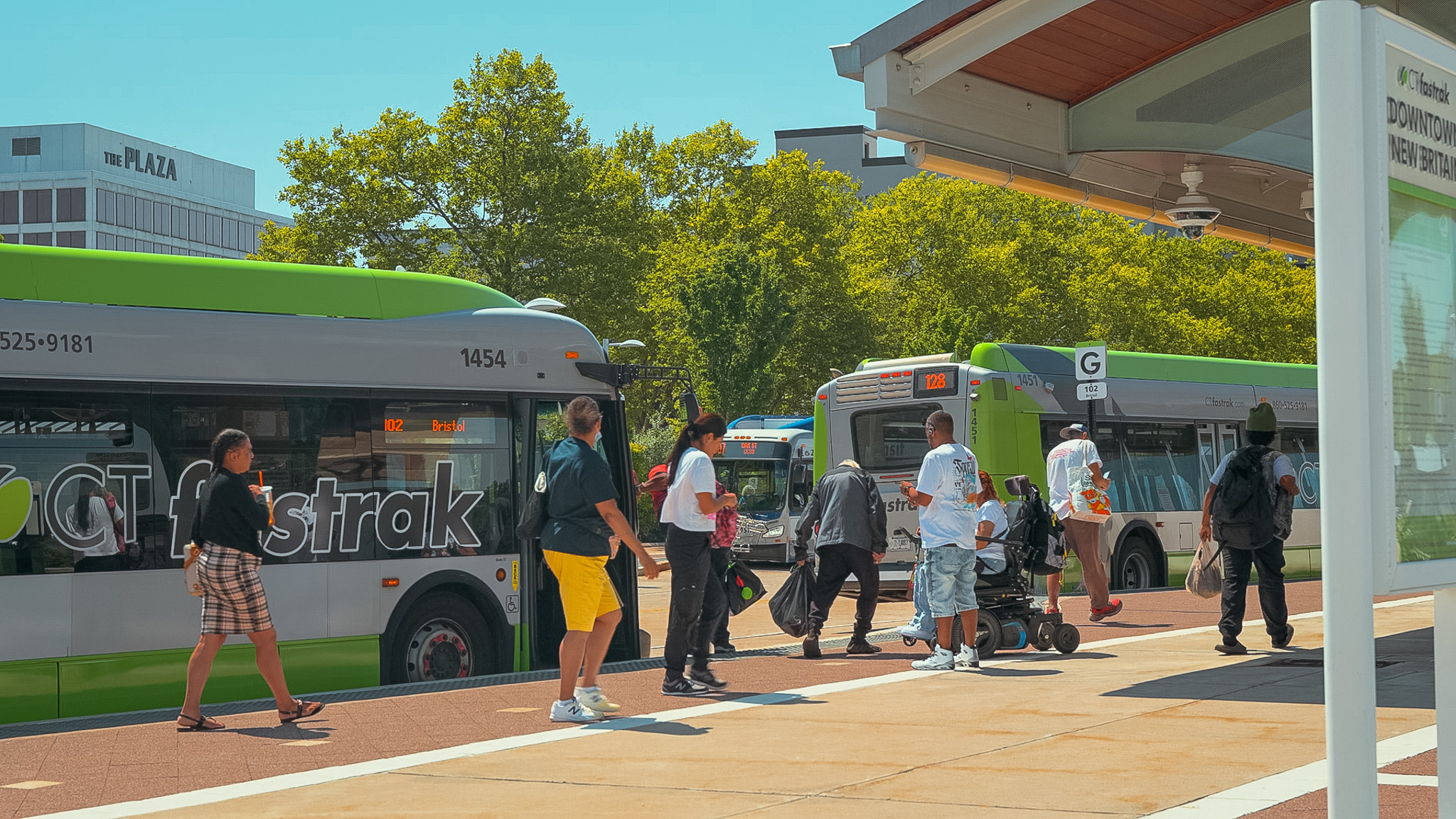
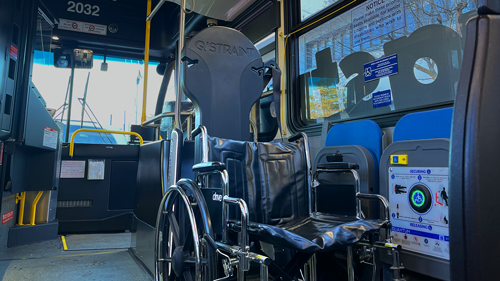
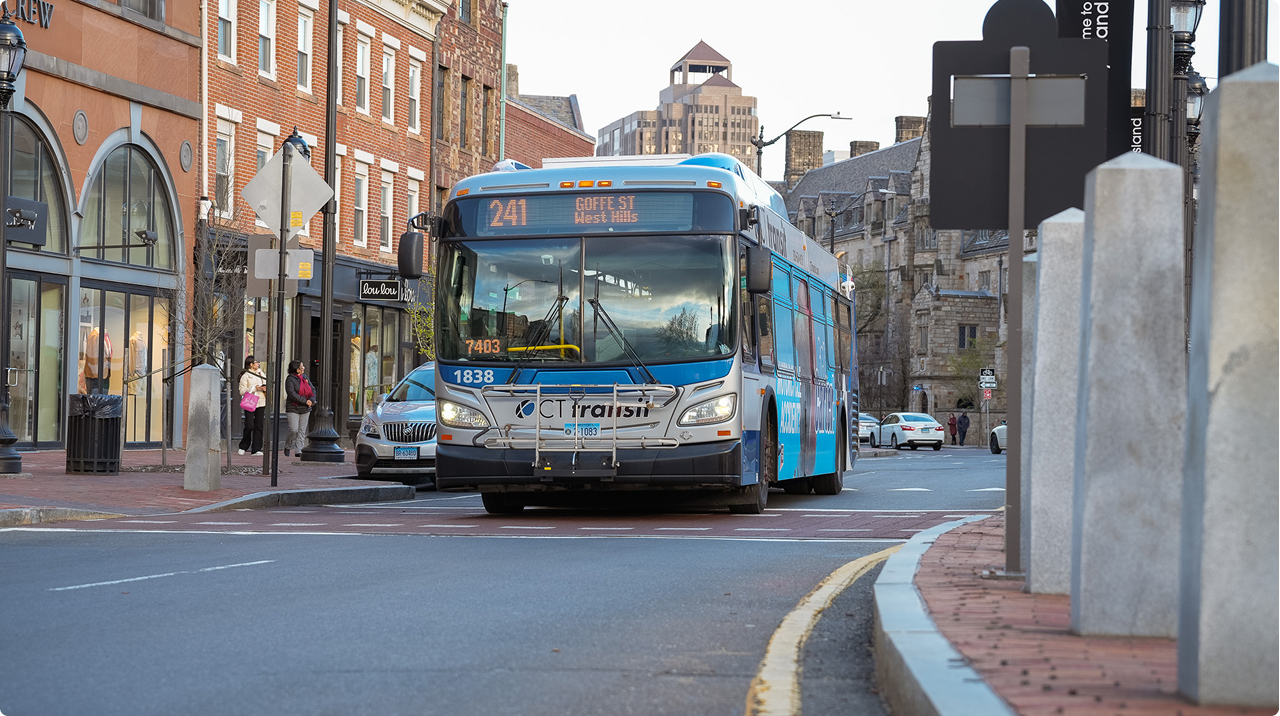
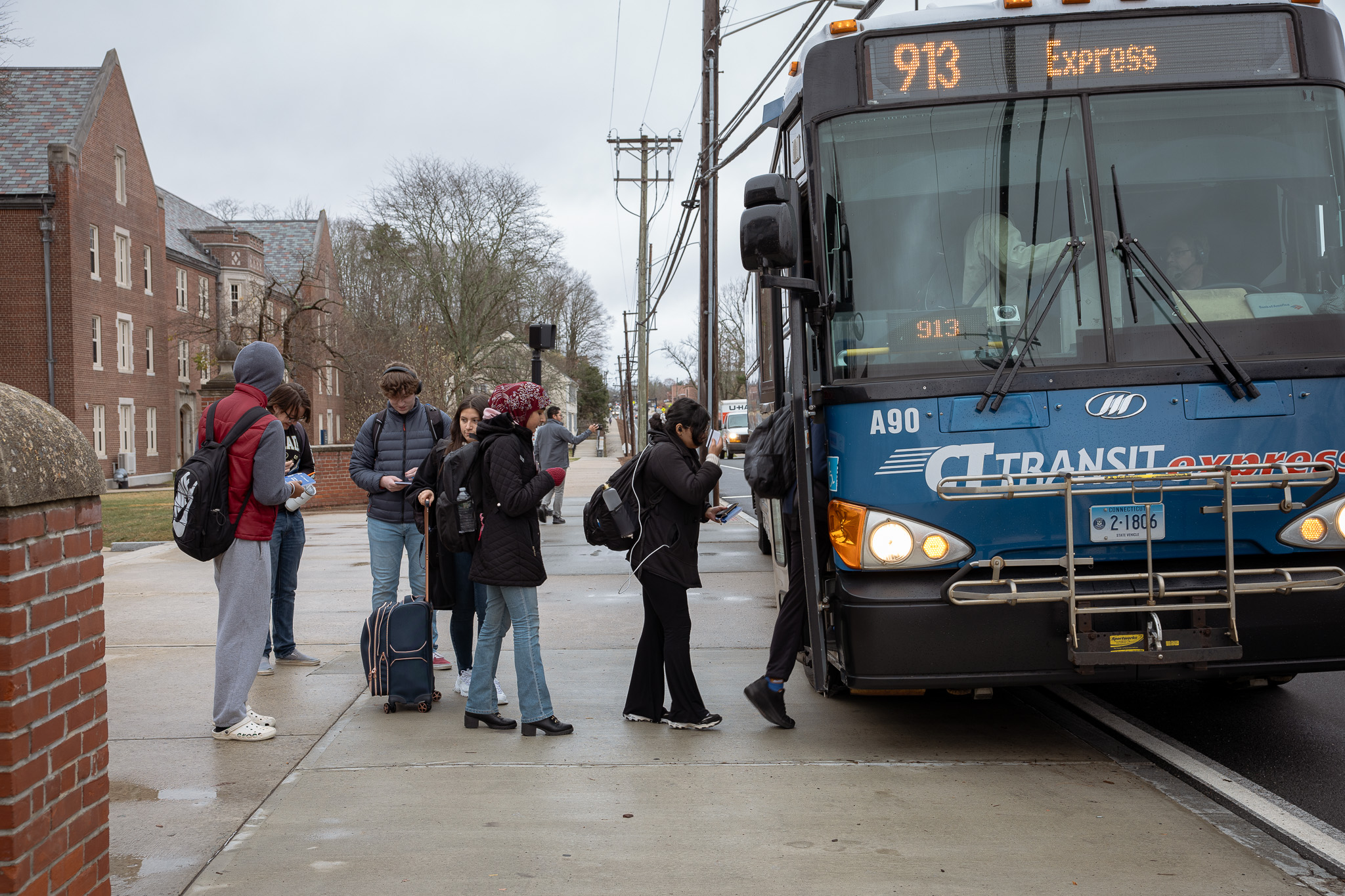
All buses have wheelchair lifts or ramps for people with disabilities to access. Also, the bus can "kneel" to lower the first step height. Please ask the operator to kneel the bus to assist you in boarding or exiting.
Most mobility devices (wheelchairs, 3-wheel scooters, and walkers) can be accommodated on the buses. Each bus has a system for securing wheelchairs. CTtransit's safety policy requires ADA-compliant securement for all mobility devices. CTtransit strives to provide the latest safety equipment on our fleet. The lap belt is encouraged and recommended for the customer's maximum safety.
Please ask the operator if you wish to use the lift or mobility ramp to board or exit the bus through the front door.
Senior citizens (65+ years) and persons with a qualifying disability can travel for a reduced fare at any time on CTtransit and all other bus systems operating under contract to the CTDOT.
Senior Citizens: If you have a Medicare card, you can ride for a reduced fare. Show your Medicare card to the operator when you board the bus. Your local transit provider is required to accept the Medicare card for half fare.
State of CT-issued Reduced Fare ID or Medicare card must be shown using a Senior/Disabled pass or ticket.
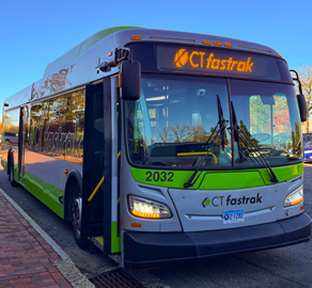
If you ride CTfastrak, CTfastrak Supervisors will inspect CTfastrak station platforms and CTfastrak buses. Remember to keep your pass or ticket handy, as you may be asked to show your proof of payment more than once during your trip. If you are riding at a reduced fare you must present proper ID and proof of payment.
You are welcome to travel on buses with your service animal. A service animal is an animal such as a guide dog, signal dog, or miniature horse individually trained to work or perform tasks for an individual with a disability, including, but not limited to, guiding individuals with impaired vision, alerting individuals with impaired hearing to intruders or sounds, providing minimal protection or rescue work, pulling a wheelchair, or fetching dropped items.
A service animal (dog) is not allowed to occupy a seat on the bus. Customers with disabilities can bring their service animals (dogs) into all transit facilities. The animals (dogs)must be under the control of the owner at all times (e.g. leashed) for the safety of all customers.
Personal Care Attendants (PCA) — A PCA is a person who is designated or employed specifically to assist the ADA certified individual with their activities of daily living and/or their personal needs. When transported on the ADA Paratransit vehicle, a PCA is entitled to ride free of charge as long they are performing their duties, and they are being picked up and transported to the same location as the eligible ADA customer.
Travel Training Program
The Kennedy Center Travel Training is a nationally acclaimed program that teaches people with disabilities and seniors how to properly and safely use the local bus and rail system on a one-to-one basis throughout the state of Connecticut. Since 1991, The Kennedy Center has successfully travel trained more than 3,000 people with cognitive, sensory, and physical disabilities, aged 16-95, to use local buses and trains to access the community. There is no charge for travel training, the program is grant funded by The Connecticut Department of Transportation.
Accessible Formats
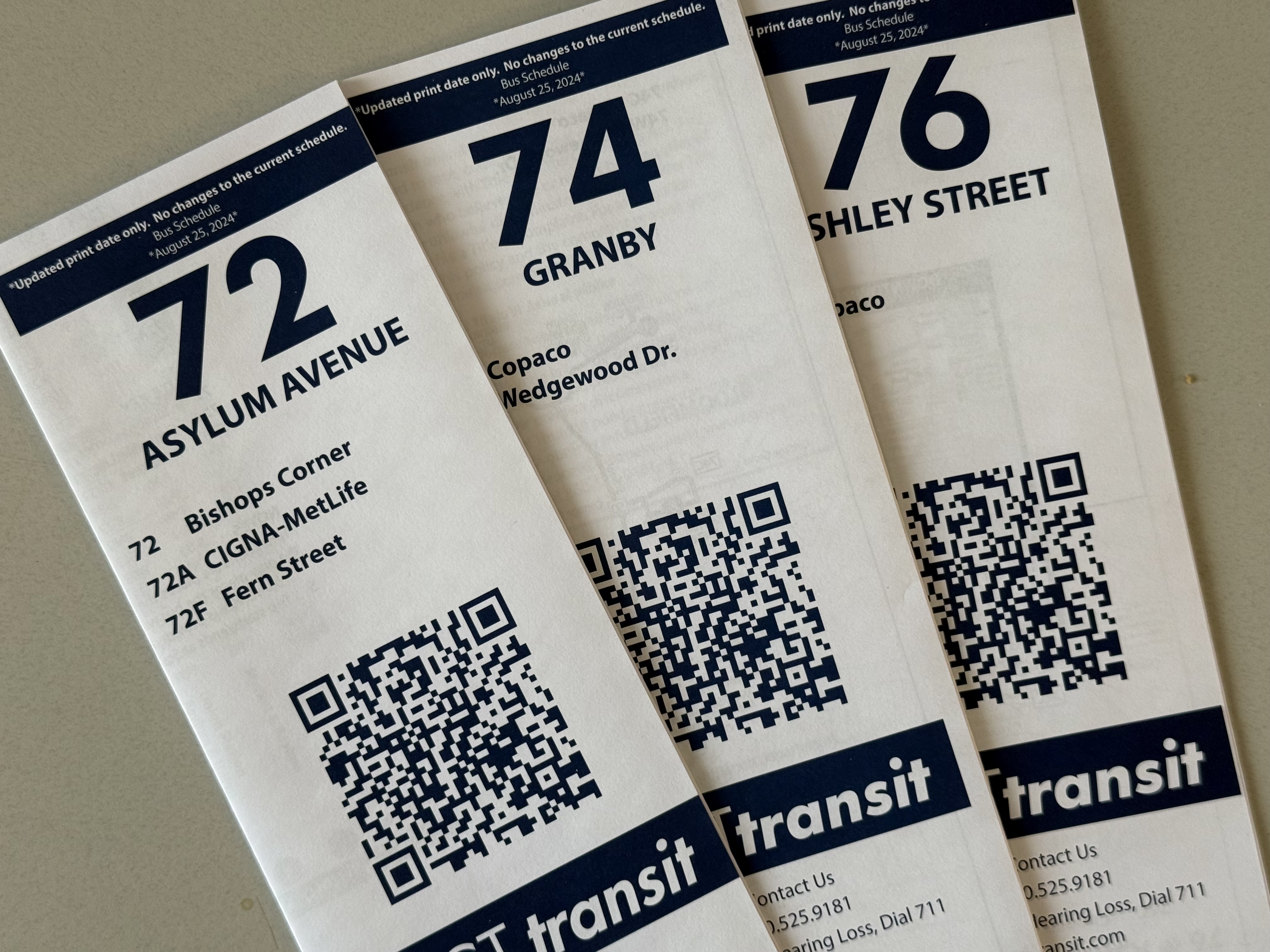
Information is available in alternative formats including, but not limited to, Braille, large print, audio or electronic media. Anyone requesting service information or assistance in any accessible formats may call the Customer Service Department at 860-525-9181.